Jiří’s Flower
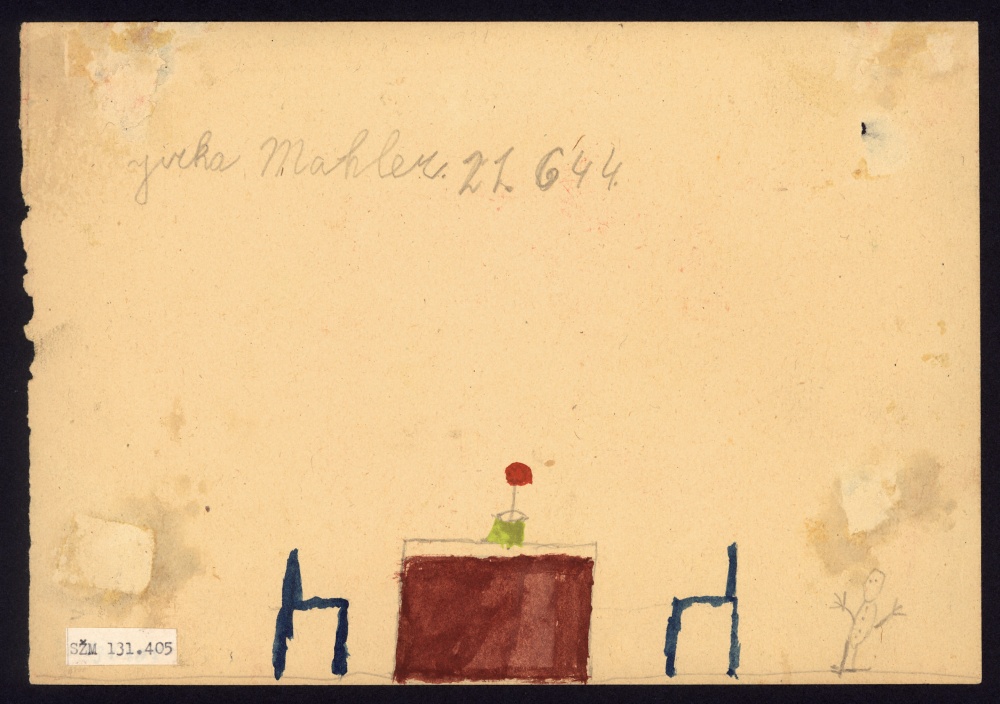
Jiří Mahler, drawing made in Terezín · Jewish Museum in Prague, inv. no. 131.405. Reproduction credit and permission to be confirmed.
Jiří Hugo Mahler
1935–1944
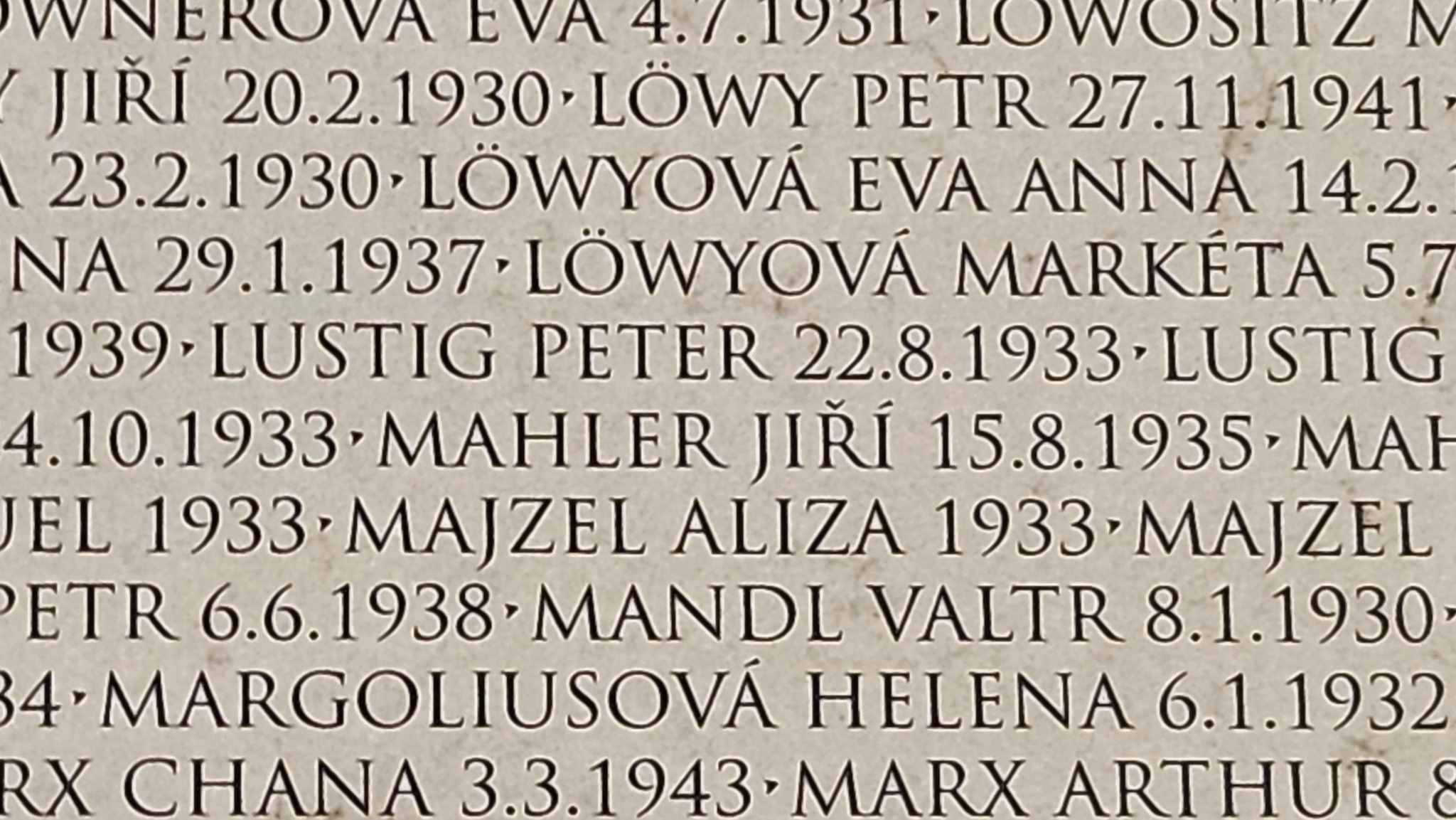
Jiří Hugo Mahler was born in Prague on 15 August 1935. He was deported to the Terezín ghetto as a young child. There, he made a watercolor during the art classes organized by artist and educator Friedl Dicker-Brandeis.
Friedl believed that making art could preserve the imagination, individuality, and emotional life of children living under persecution. She safeguarded thousands of their drawings, many of which survive today in the Jewish Museum in Prague.
Jiří was deported to Auschwitz in October 1944 and murdered. His drawing remains a trace of a particular child — not simply a symbol of the many lives lost.
Giving absence
a physical presence
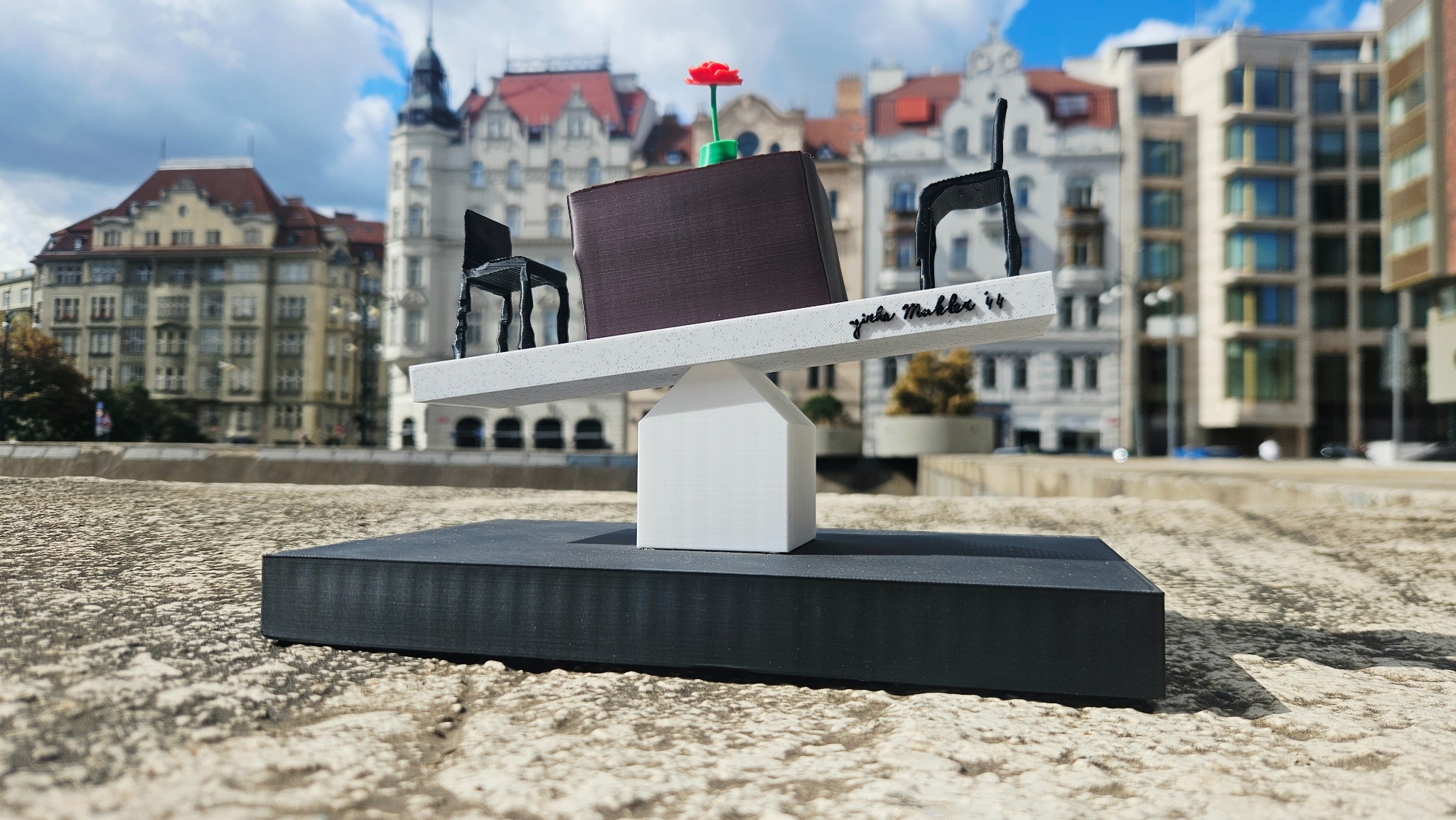
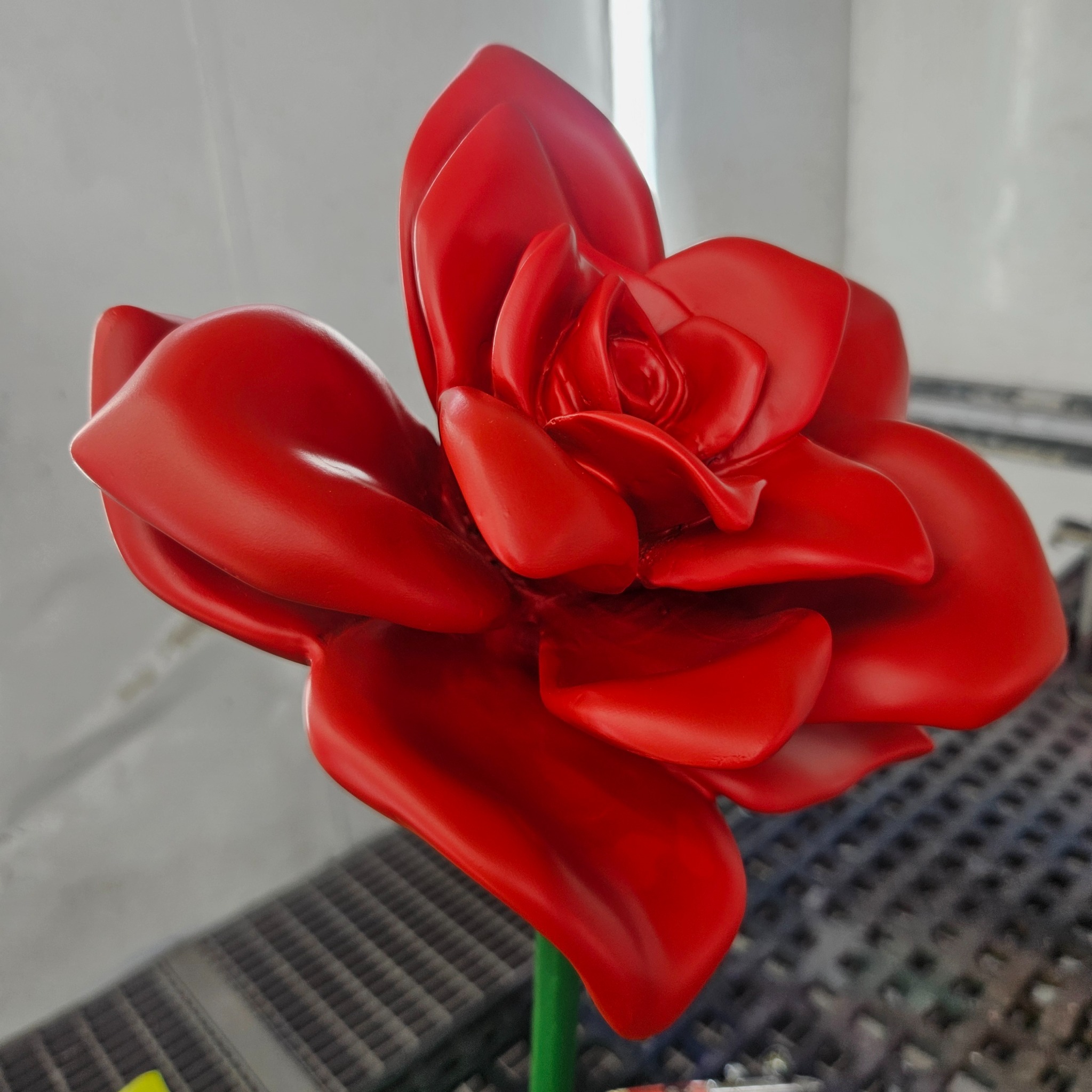
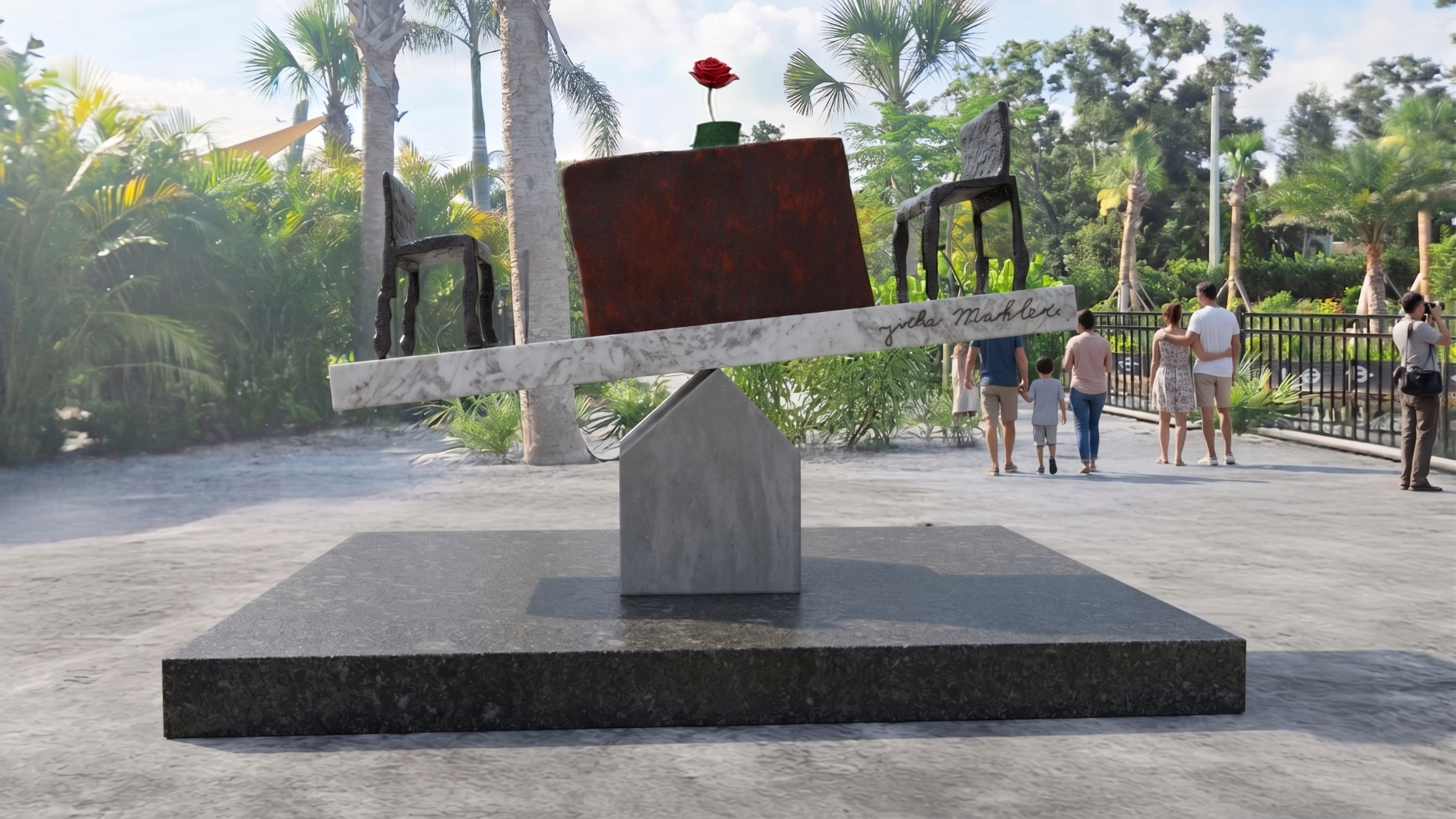
Jiří’s Flower transforms a surviving drawing into a quiet encounter in public space: two empty chairs, a table, a vase, and a single flower. The empty chairs invite us to imagine those who are no longer here; the flower carries a child’s act of creation into the present.
Conceived for the Children’s Memorial Garden in Sarasota, Florida, the work is made in bronze. Its simplicity is deliberate. Rather than reconstructing a life that cannot be recovered, the sculpture creates a place where memory can be encountered.
From an image
to an encounter
The project began with an encounter with Jiří’s drawing and grew into a process of research, sculptural development, and filmmaking. In Prague and Terezín, archival study and visits to places connected with Jiří’s life became part of the work itself.
Back in the studio and foundry in Israel, the drawing’s fragility found a new material expression. A documentary directed by Laura Bialis follows this passage between archive, artist, sculpture, and public memorial.
Tracing the journey